
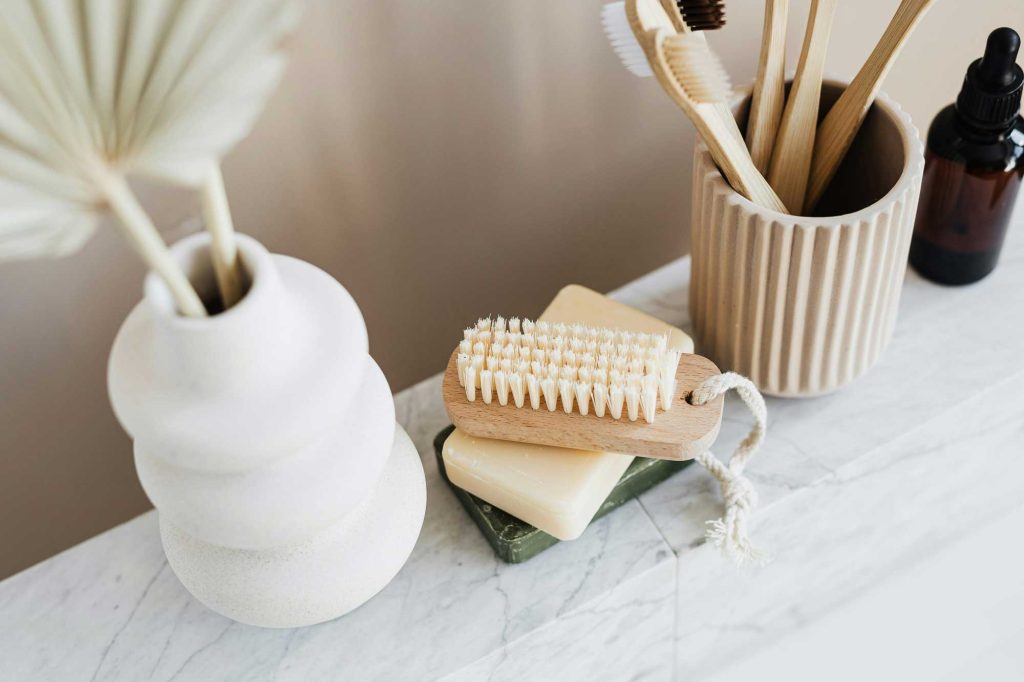
The bathroom is one of the most waste-producing rooms in the home. From plastic shampoo bottles to disposable razors and cotton pads, it’s easy to accumulate a surprising amount of landfill waste without even realising it.
The good news? Creating a zero-waste bathroom doesn’t require a complete lifestyle overhaul or expensive renovations. With a few thoughtful changes, you can significantly reduce waste, lower your environmental footprint and even save money over time.
In this guide, we’ll walk you through 7 simple swaps that will help you transition toward a more sustainable, low-waste bathroom – without sacrificing comfort, hygiene, or style.
A zero-waste bathroom aims to minimise waste sent to landfill by replacing disposable, plastic-heavy items with reusable, compostable or refillable alternatives.
While “zero waste” is an ideal rather than a strict rule, every swap you make helps reduce pollution, plastic waste and resource consumption.
The key is progress, not perfection.
Traditional plastic toothbrushes are used for just a few months but can take hundreds of years to break down. In Australia alone, millions of toothbrushes end up in landfill every year.
Switch to a bamboo toothbrush with plant-based or recyclable bristles.
Tip: Remove the bristles before composting the handle, as most bristles are nylon.
Shampoo and conditioner bottles are one of the biggest contributors to bathroom plastic waste. Even recyclable plastics often don’t get recycled due to contamination.
Use shampoo and conditioner bars instead of liquid products.
Many people are surprised by how well solid bars lather and cleanse – often better than conventional formulas.
Disposable razors and cartridge systems are made from mixed materials that are nearly impossible to recycle.
Switch to a reusable stainless steel safety razor.
Beginner Tip: Use a quality shaving soap or bar and light pressure when starting out.
Disposable cotton pads require water-intensive cotton farming and are used once before being thrown away.
Choose reusable cotton rounds or face cloths.
Simply toss them in the washing machine and reuse again and again.
Conventional deodorants come in plastic packaging that rarely gets recycled and often contain unnecessary chemicals.
Opt for natural deodorants in refillable, compostable or glass packaging.
Your body may need a short adjustment period, but most users find natural deodorants work just as well.
Traditional toilet paper is often wrapped in plastic and made from virgin forest materials. Cleaning products also come in single-use plastic bottles.
Refill stations and cleaning tablets are becoming more widely available across Australia.
Pads and tampons are single-use items containing plastic that can take centuries to break down.
Try menstrual cups, reusable pads or period underwear.
This single change can prevent thousands of disposable products from entering landfill over a lifetime.
Even beyond the 7 swaps, small habits can make a big difference:
Remember, the most sustainable product is the one you already own.
The bathroom is a great place to begin your zero-waste journey because:
For many people, bathroom swaps are the gateway to a more eco-conscious lifestyle throughout the home.
Yes. While 100% zero waste may not be possible, reducing waste significantly is achievable for most households through gradual swaps.
Some items cost more upfront but save money over time by lasting longer and replacing disposable alternatives.
You can start immediately. Most people transition gradually as products run out – there’s no need to throw anything away.
Yes. There are formulas for dry, oily, curly, colour-treated and sensitive scalps. It may take a short adjustment period.
Bamboo toothbrushes, reusable cotton pads or shampoo bars are usually the easiest and most affordable starting points.
Absolutely. Recycling is still important, but reducing and reusing comes first.
Building a zero-waste bathroom doesn’t have to be overwhelming. By making just seven simple swaps, you can dramatically cut down on plastic waste, lower your environmental impact and create a healthier home for yourself and the planet.
At Eco Friendly Essentials, we believe sustainable living should be accessible, practical and achievable – starting with everyday choices in your home.
Every small change matters.
Share this article:-